
Ceiling Fan Installation: What Homeowners Should Know
Why Ceiling Fan Installation Matters
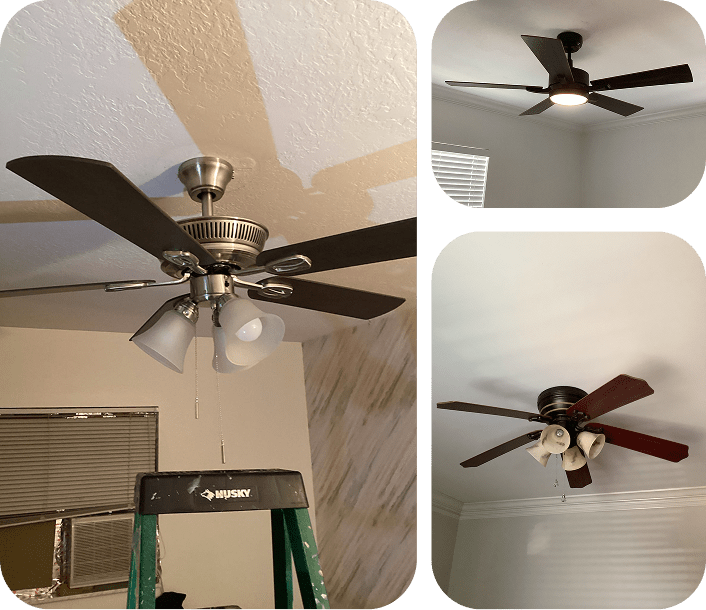
A ceiling fan can make a room more comfortable, improve airflow, support energy efficiency, and add function to bedrooms, living rooms, kitchens, patios, and other areas of the home. However, ceiling fan installation is not the same as replacing a basic light fixture. A ceiling fan has weight, movement, vibration, wiring needs, and mounting requirements that must be handled correctly for safe long-term use.
Many homeowners assume that if a ceiling already has a light fixture, it can automatically support a fan. That is not always true. A standard light fixture box may be designed only to hold the weight of a stationary light. A ceiling fan needs a fan-rated electrical box and secure mounting because the fan motor and blades create movement while operating. If the wrong box or support system is used, the fan may wobble, loosen, damage wiring, or become unsafe.
Before installing a ceiling fan, homeowners should understand the difference between power availability, structural support, switch control, fan size, blade clearance, and electrical safety. The goal is not only to make the fan work. The goal is to make sure it is installed properly, supported securely, and connected safely.
Can a Ceiling Fan Be Installed Where a Light Fixture Is?
Sometimes a ceiling fan can be installed where an existing light fixture is located, but only if the electrical box and wiring are suitable. The most important question is whether the existing box is rated to support a ceiling fan. A fan-rated box is designed to handle both the weight and movement of a fan. A regular light fixture box may not be strong enough.
If the existing box is not fan-rated, it should be replaced with the correct type of support. This may involve installing a fan-rated brace between ceiling joists or securing the box directly to framing. This is especially important in older homes where the original ceiling box may have been installed only for a lightweight fixture.
The wiring also needs to be reviewed. Some ceiling locations have wiring for a light only. Others may have separate wiring for a fan and light kit. If the homeowner wants wall switch control, dimmer control, remote control, or separate fan and light operation, additional wiring or control changes may be needed.
Why a Fan-Rated Electrical Box Is Important
A ceiling fan does not sit still like a light fixture. Even when properly balanced, a fan creates motion. Over time, that motion can place stress on the mounting hardware and electrical box. A fan-rated box is designed to manage that movement safely.
Installing a ceiling fan on a non-rated box can create several problems. The fan may wobble, make noise, loosen over time, damage the ceiling, strain the wiring, or pull away from the mounting point. In serious cases, an improperly mounted fan can fall.
This is why the support box matters as much as the wiring. A fan that turns on but is not properly supported is not properly installed. A licensed electrician can inspect the existing ceiling box, confirm whether it is fan-rated, and install the correct support if needed.
Choosing the Right Ceiling Fan Size
Ceiling fan size affects both comfort and performance. A fan that is too small may not move enough air for the room. A fan that is too large may overpower the space, create too much airflow, or look out of proportion. Blade span, ceiling height, room size, and placement all matter.
Small bedrooms, home offices, and compact rooms usually need smaller fans. Larger bedrooms, living rooms, great rooms, and covered patios may need wider blade spans. Rooms with high ceilings may require a downrod so the fan sits at a more effective height. Low ceilings may require a flush-mount or low-profile fan.
The goal is to create comfortable airflow without creating clearance or safety issues. Fan blades should have enough space from walls, furniture, cabinets, doors, and ceilings. In rooms with high traffic or low ceilings, clearance becomes especially important.
Ceiling Height and Fan Placement
Ceiling height is one of the most important installation details. A ceiling fan needs to be mounted at a safe and effective height. If the fan is too high, airflow may not reach the room as well. If it is too low, the blades may create a safety hazard.
For standard ceilings, many homeowners choose a traditional mount or flush-mount fan depending on available clearance. For vaulted or high ceilings, a downrod may be needed. A downrod lowers the fan to a better operating height while still keeping safe clearance.
Placement also matters. A ceiling fan should usually be centered in the room or installed where airflow is most useful. In bedrooms, that may be above the bed or centered in the sleeping area. In living rooms, it may be centered over the main seating area. In outdoor covered spaces, placement should consider seating, moisture exposure, and fixture rating.
Indoor vs. Outdoor Ceiling Fans
Not all ceiling fans are designed for the same environment. Indoor fans are made for dry interior spaces. Outdoor fans are designed for areas where humidity, moisture, and temperature changes may be present.
For covered patios, porches, lanais, and other exterior areas, homeowners should choose a fan rated for damp or wet locations depending on where it will be installed. A damp-rated fan may be suitable for covered areas that are exposed to humidity but not direct rain. A wet-rated fan is designed for more direct exposure to moisture.
Using an indoor fan outdoors can lead to early failure, corrosion, electrical problems, or safety concerns. Outdoor ceiling fan installation should also include proper wiring methods, weather-appropriate components, and safe controls.
Wall Switches, Remote Controls, and Smart Controls
Ceiling fans can be controlled in several ways. Some use pull chains. Others use wall switches, remote controls, smart controls, or a combination of fan and light controls. The right option depends on the wiring in the home and the homeowner’s preferences.
If the fan includes a light kit, homeowners may want separate control for the fan and light. This often requires compatible wiring or a remote-control setup. If the existing switch controls only one fixture function, additional wiring or control changes may be needed for separate operation.
Smart fan controls can add convenience, but compatibility matters. Not every fan works with every switch, dimmer, or smart control. Using the wrong control can cause buzzing, flickering, limited speed control, motor problems, or early equipment failure. A licensed electrician can help confirm that the fan, switch, remote receiver, and wiring are compatible.
Can a Ceiling Fan Be Installed Without Existing Wiring?
Yes, a ceiling fan can often be installed in a room without an existing ceiling fixture, but the job is more involved. The electrician may need to run new wiring, install a fan-rated box, add a wall switch, and connect the fan to an appropriate circuit.
This type of installation should be handled professionally because it may involve attic access, ceiling work, wall fishing, switch placement, and circuit evaluation. The electrician also needs to make sure the new wiring is safe, properly protected, and connected according to applicable electrical requirements.
Installing a fan where no fixture currently exists can be a great upgrade for rooms that feel warm, lack airflow, or rely only on lamps for lighting. It simply requires more planning than replacing an existing fan.
Common Ceiling Fan Installation Mistakes

One of the most common mistakes is using a regular light fixture box instead of a fan-rated box. Another mistake is choosing a fan that is too large or too small for the room. Homeowners may also install a fan too low, use the wrong downrod length, skip blade balancing, or connect controls incorrectly.
Another common issue is using a dimmer switch that is not designed for fan motor control. A standard light dimmer should not be used to control fan speed unless the fan and control are specifically designed for that use. Incorrect controls can damage the fan motor or create unsafe conditions.
Outdoor fan mistakes are also common. Installing an indoor-rated fan in a damp or wet location can create corrosion, premature failure, and electrical safety concerns. Exterior fan installations should always use properly rated equipment.
Why Ceiling Fans Wobble
A small amount of movement can be normal, but a ceiling fan should not shake severely. Wobbling can happen because of unbalanced blades, loose screws, bent blade arms, improper mounting, incorrect downrod installation, or a ceiling box that is not secure.
Sometimes wobble can be corrected by tightening hardware or using a balancing kit. However, if the fan is new and wobbles severely, or if an older fan suddenly starts moving more than usual, it should be checked. A loose mounting bracket, failing box, or support problem can become dangerous if ignored.
If a ceiling fan wobbles, makes grinding sounds, smells hot, sparks, or causes the breaker to trip, stop using it and schedule service.
Ceiling Fan Installation and Electrical Safety
Ceiling fan installation involves both mechanical support and electrical work. The fan needs to be mounted securely, wired correctly, grounded properly, and connected to safe controls. If a light kit is included, that wiring also needs to be connected correctly.
Electrical safety becomes even more important when the installation involves older wiring, aluminum wiring, missing grounding, damaged boxes, outdated switches, or multiple controls. Homes with older electrical systems may need additional evaluation before a new fan is installed.
A licensed electrician can check the condition of the existing wiring, confirm whether the box is fan-rated, install the correct support, connect switches or remotes, and test the fan for safe operation.
What Homeowners Can Check Before Scheduling Installation
Before calling an electrician, homeowners can gather a few helpful details. Identify where the fan will be installed and whether there is already a light fixture in that location. Note the ceiling height, room size, and whether the space is indoors, outdoors, covered, damp, or exposed to moisture.
It also helps to decide whether you want a light kit, remote control, wall switch, smart control, or separate fan and light operation. If you already purchased a fan, keep the installation manual and product details available for the electrician.
Homeowners should not remove the existing box, open wiring, modify switches, or work inside the electrical panel. Observation and planning are helpful, but wiring and support work should be handled by a professional.
When to Replace an Existing Ceiling Fan
An existing ceiling fan may need replacement if it wobbles excessively, makes loud noises, no longer changes speeds correctly, has a failing light kit, smells hot, trips the breaker, or no longer fits the room’s needs. Older fans may also be less efficient, less quiet, or less compatible with modern controls.
Replacement may be simple if the existing fan was installed correctly on a fan-rated box with suitable wiring. However, if the previous fan was installed improperly, the electrician may need to correct the support, wiring, or controls before installing the new fan.
A ceiling fan replacement is also a good time to evaluate room comfort, lighting needs, and switch convenience.
When to Call a Licensed Electrician
Call a licensed electrician if you are installing a ceiling fan where no fixture exists, replacing a light with a fan, adding a fan to an outdoor area, installing a fan on a high or vaulted ceiling, adding wall controls, or troubleshooting wobble, buzzing, heat, sparks, or breaker trips.
You should also call an electrician if the existing ceiling box is not clearly fan-rated, the wiring looks old or damaged, the switch does not work correctly, or the fan will be installed in a damp or exterior location.
Professional installation helps ensure the fan is safely supported, properly wired, correctly controlled, and appropriate for the room.
Professional Ceiling Fan Installation From Red Royal Electric
If you are planning a ceiling fan installation, Red Royal Electric can help make sure the job is done safely and correctly. Whether you need a new fan installed, an old fan replaced, wiring added, a fan-rated box installed, or controls updated, a professional evaluation can help you avoid unsafe installation mistakes.
Red Royal Electric can also inspect related electrical concerns, including wiring condition, switch compatibility, panel issues, lighting connections, and circuit safety. The goal is to install a ceiling fan that improves comfort while supporting long-term electrical reliability.
Schedule service with Red Royal Electric today to get professional help with ceiling fan installation, replacement, or troubleshooting.
FAQs About Ceiling Fan Installation
Can I install a ceiling fan where a light fixture is now?
Sometimes, but only if the existing electrical box is fan-rated and the wiring is suitable. A standard light fixture box may not safely support the weight and movement of a ceiling fan.
What is a fan-rated electrical box?
A fan-rated electrical box is designed to support the weight and motion of a ceiling fan. It is secured in a way that can handle vibration and movement better than a standard light fixture box.
Why does my ceiling fan wobble?
A ceiling fan may wobble because of unbalanced blades, loose hardware, bent blade arms, poor mounting, or an electrical box that is not properly rated or secured. Severe wobble should be inspected before the fan is used again.
Can a ceiling fan be installed without existing wiring?
Yes, but new wiring, a fan-rated box, and a switch may need to be installed. This type of work should be handled by a licensed electrician.
Do outdoor ceiling fans need to be different from indoor fans?
Yes. Outdoor fans should be rated for the location where they are installed. Damp-rated or wet-rated fans may be needed depending on moisture exposure.
Can I use a dimmer switch to control a ceiling fan?
A standard light dimmer should not be used to control a ceiling fan motor unless the fan and control are specifically designed for that use. Fan speed controls must be compatible with the fan.
When should I replace my ceiling fan?
Consider replacing a ceiling fan if it wobbles excessively, makes unusual noises, stops changing speeds, smells hot, trips a breaker, or no longer provides the airflow or lighting you need.
Does Red Royal Electric install ceiling fans?
Yes. Red Royal Electric provides ceiling fan installation and related home electrical services, including wiring, switch installation, fan replacement, troubleshooting, and safety inspections.
